00:00
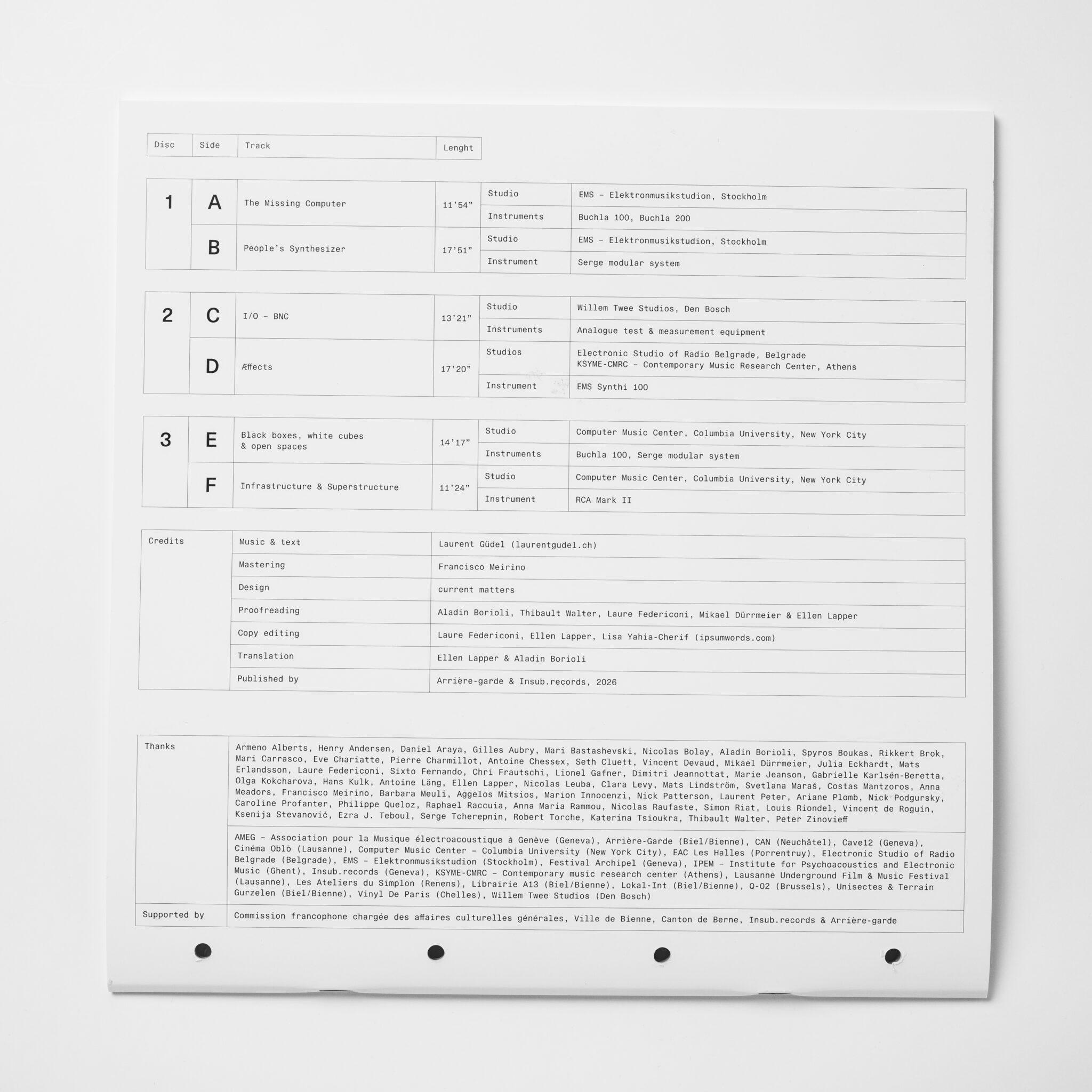
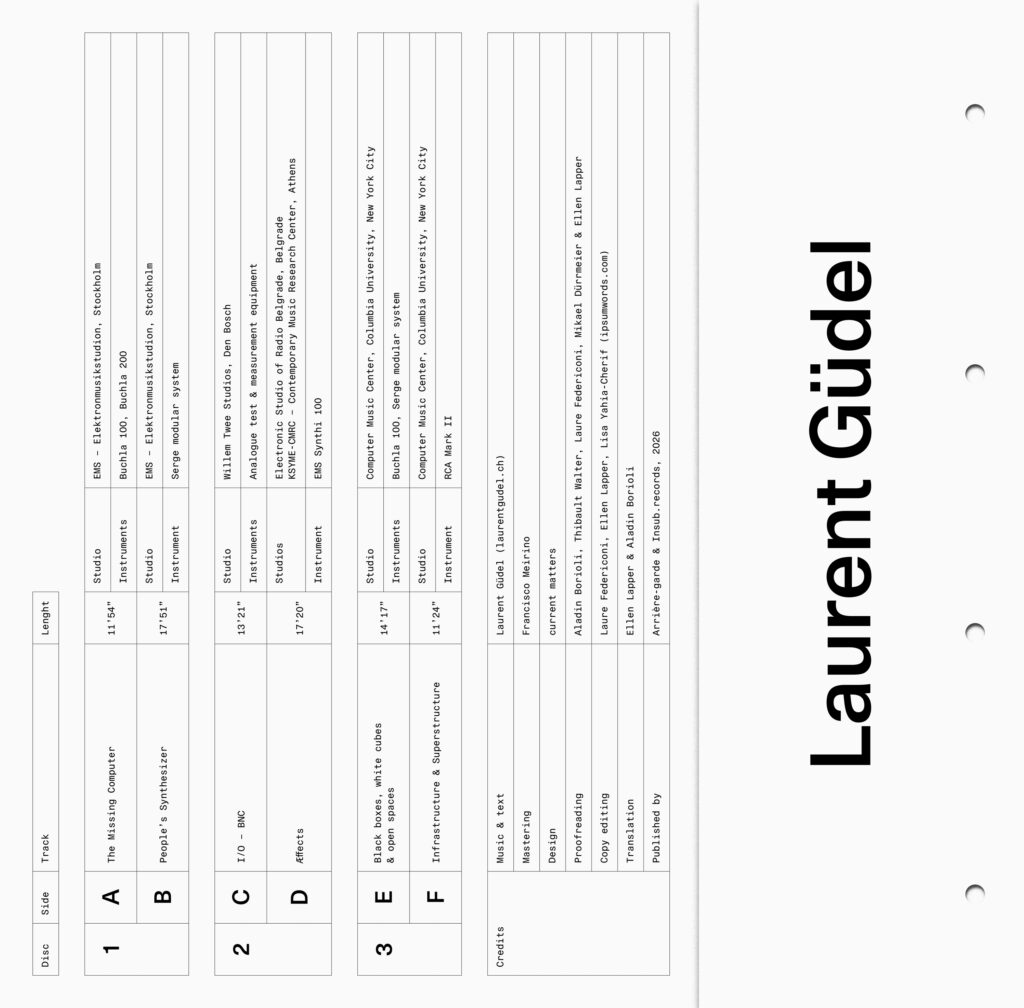
State Music (3×LP + booklet)
Preface Around 2015, after a series of layoffs justified by economic reasons, I started to carry out a few artistic projects and make a bit more music again. Since things were already shitty, I told myself I might as well try and take control of my semi-precarious situation. Between 2018 and 2020, I obtained three public grants with the aim of setting up a series of work residencies; the hope was to approach several various pioneering studios in the field of electronic music and improvise on their audio equipment and first-generation analogue modular synthesisers. In the end, I was able to work at EMS – Elektronmusikstudion in Stockholm, Radio Belgrade and KSYME in Athens in 2019, Willem Twee in Den Bosch in the Netherlands in 2020 and, later, at Columbia University’s Computer Music Center in New York in 2023. A lot of content on this website will be related to State Music. Outside this LP, there’s many other outputs like multichannel concerts, texts, interviews and exhibitions.
Playing iconic instruments was interesting, but I didn’t want to fetishize these machines. Plus, back in 2018, I realised that my music alone wouldn’t be enough to convince cultural institutions to fund this first solo album. I needed to propose something extra, an approach, something along the lines of research, for example. I’ve always found my interest in electroacoustic and concrete music a bit suspicious. Where did this attraction to instruments and sonorities from the pioneer era of the early 1950s come from? Even before seriously getting into the practice of electronic music, I was wary of it. I could feel I was caught up in a romanticised vision of this era, exacerbated by the black and white images of these iconic studios and machines – images which were on record covers from this period, in the books I read, and all over the internet. I told myself there must be a fundamental difference between the emergence of music driven by social demands, spiritual concerns or emancipatory discourses, and this. Intuitively, it seemed to me that the answer might lie in the relationship to the means of production. Who owned the instruments? Who made them? Who could work in these studios at the time, and would I be able to do so today?
I wanted to widen my perspective and get a better understanding of the history of the sounds I was beginning to create. My questions were numerous: What were the power relations between electronic music studios and radio institutions? What types of governments and political regimes had financed – or not financed – the development of this music? What should we understand about the links between military industries and audio technologies? What was each state’s role in the development of this music? These stories have already been well documented but I’m trying to connect them here in a personal way. Through this text and project, I seek to engage with research, writing and inquiry around these issues, outside of academic circles. Most of my sources here are secondary and there is no clearly defined research method, just a curiosity for those actively critiquing creative electronic institutions. And above all, I’m doing this for myself – to question my own music (not that of others) and to speculate through this critical questioning.
Finally, I want to thank my friend Aladin Borioli – artist, photo grapher, beekeeper and anthropologist. We were classmates between 2005 and 2009, then we kind of lost touch. He went on to study art before leaving Switzerland for Berlin to undertake a master’s in Visual Anthropology at the Freie Universit.t; meanwhile, I was working as a freelance graphic designer and journalist. One day, he contacted me for a collaboration: he needed music, sounds and recordings for one of his projects. I obviously accepted and we went to Morocco, to Inzerki. We interviewed Hassan Souaf, an incredible beekeeper, recorded his hives, edited sound pieces and made a film without images. Aladin’s methods, which oscillated between art and humanities – with a penchant for philosophy, politics and the history of technologies – inspired me. I suddenly felt like doing fieldwork too and I quickly thought of electronic music studios – interviewing the people who work there, consulting archives and improvising on their old analogue synthesisers. All this seemed exciting to me and contributed to launching this hands-on investigation, as a self-taught amateur.
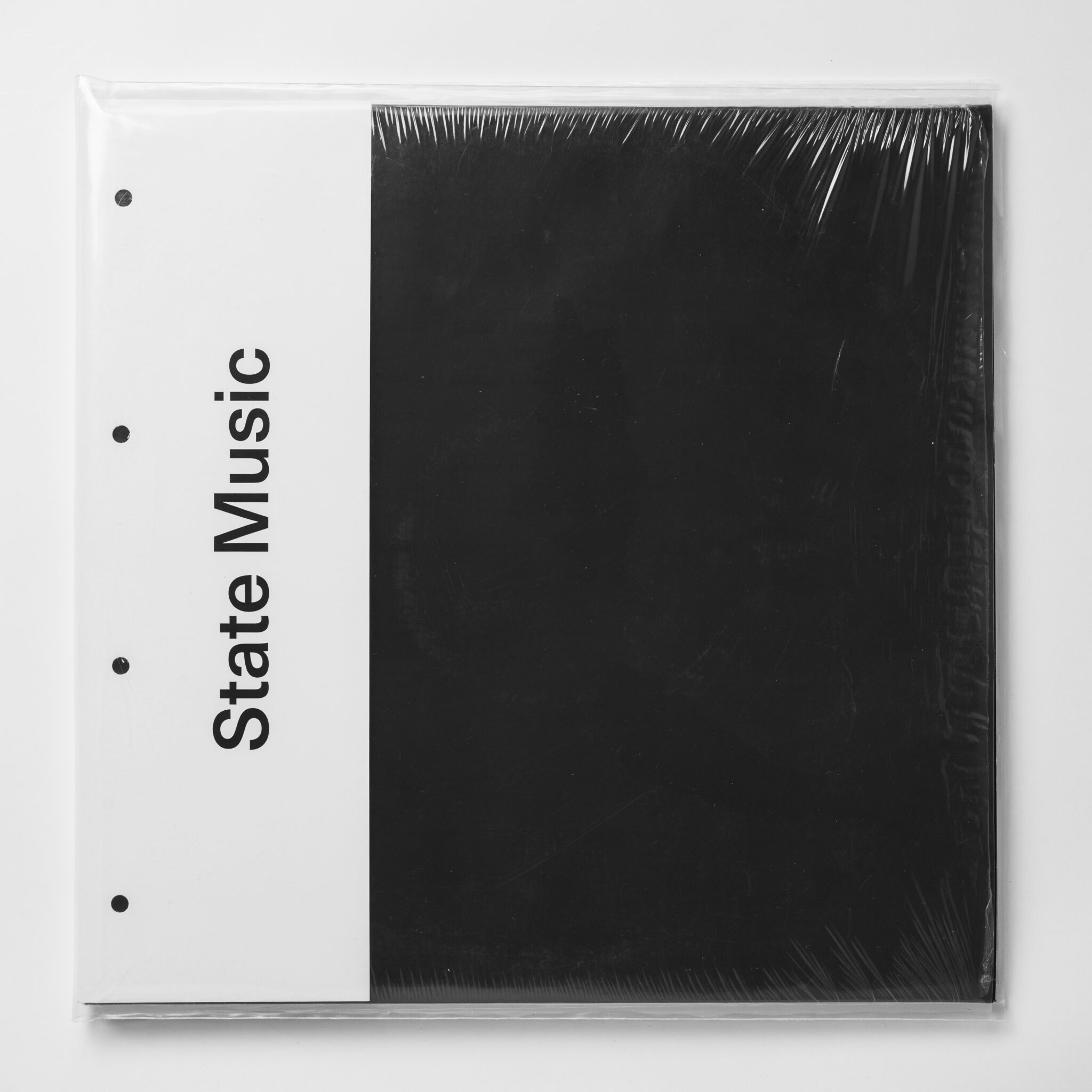
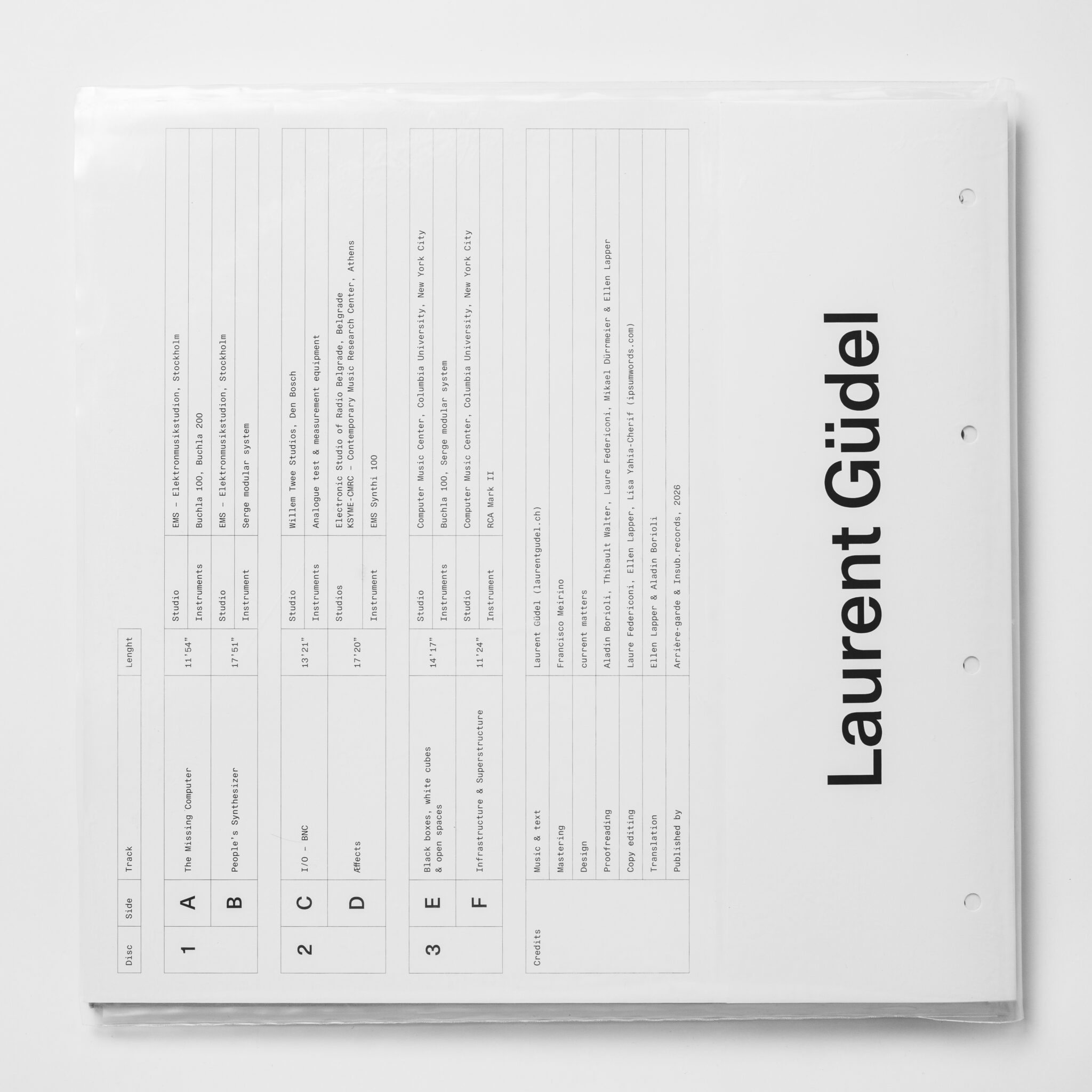
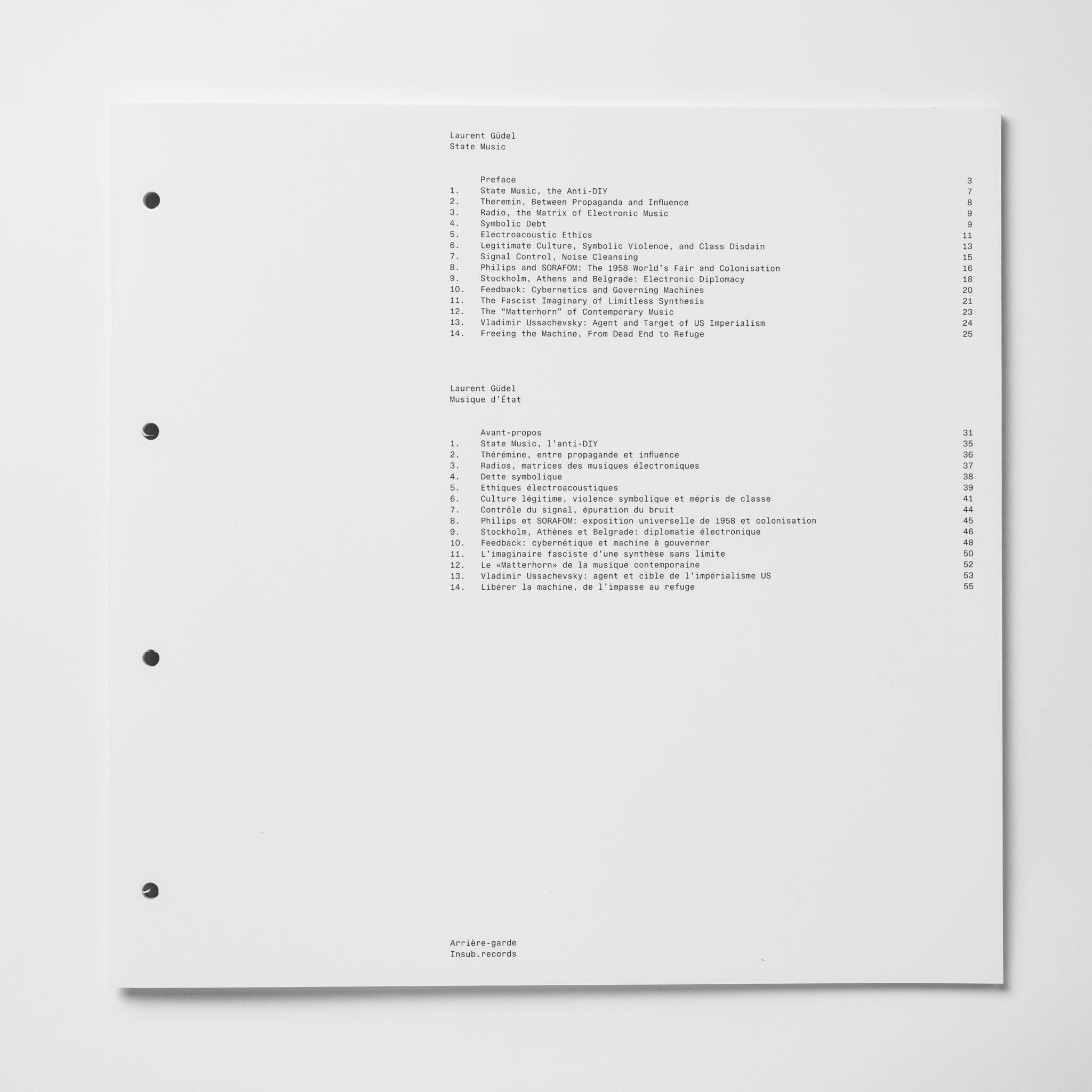
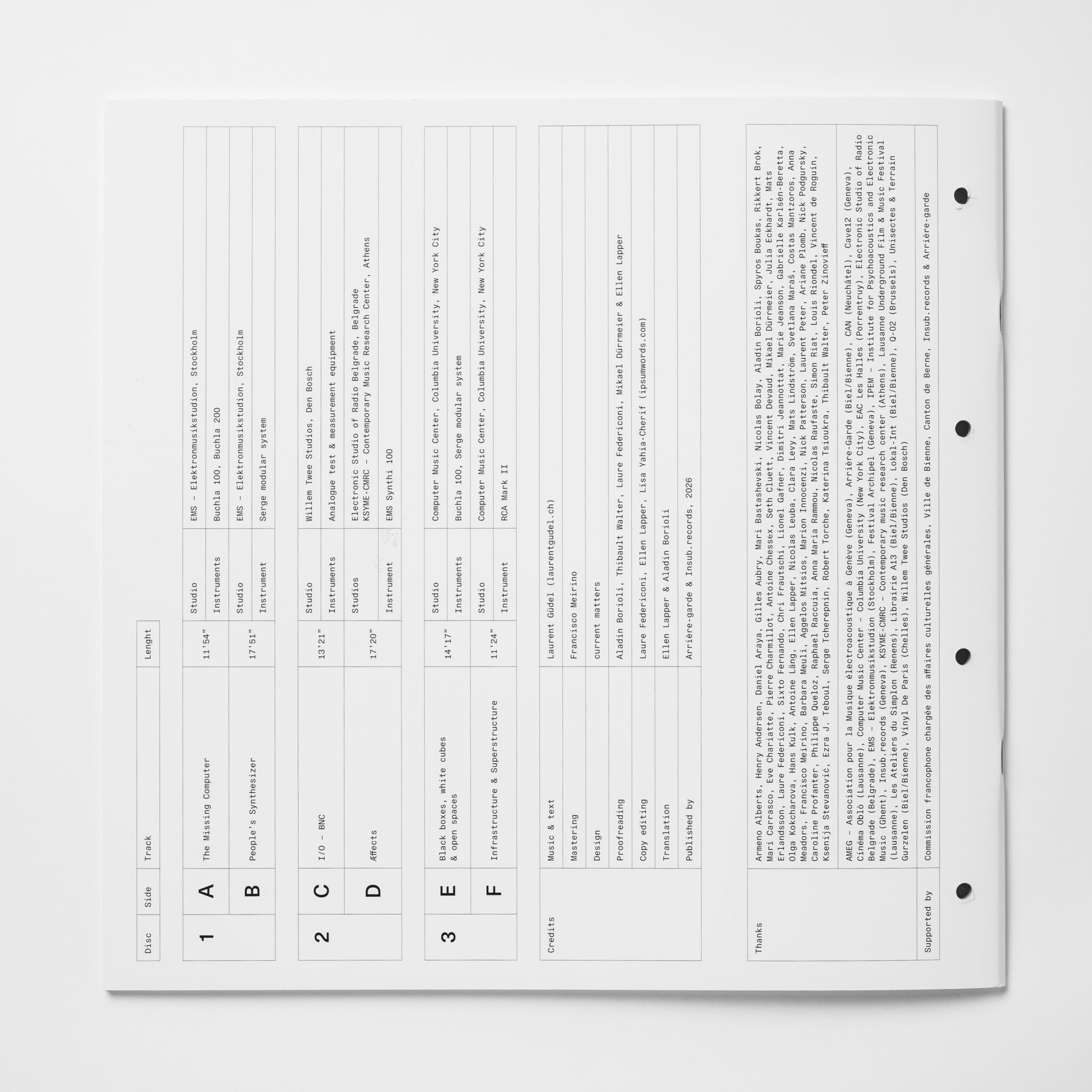
State Music doesn’t mean anything. It’s not a musical genre. Which is just as well, because I didn’t want to approach this story from a musicological perspective. I’m more interested in politics and economics. Of course, by pushing music out the door, it comes back in through the window. But in these coming pages, when I talk about music or a compositional process, I’m generally trying to discuss it from a political or economic angle. I’m proposing we consider the term State Music as a kind of polar opposite to DIY (Do It Yourself) music – the economic and organisational model of the scenes I grew up in – which I was leaving behind for the first time with this project. Because honestly, that’s what I thought when I first saw photos of the WDR ( Westdeutscher Rundfunk) studios in Cologne and the GRM (Groupe de Recherches Musicales) in Paris. The images depicted specialists in front of machines that looked like control panels in nuclear power plants. These shots seemed unreal, I thought, as I rehearsed together with my rock band in a bomb shelter converted into a music space, as is often the case in Switzerland. They were at the controls; we were in the shelters.
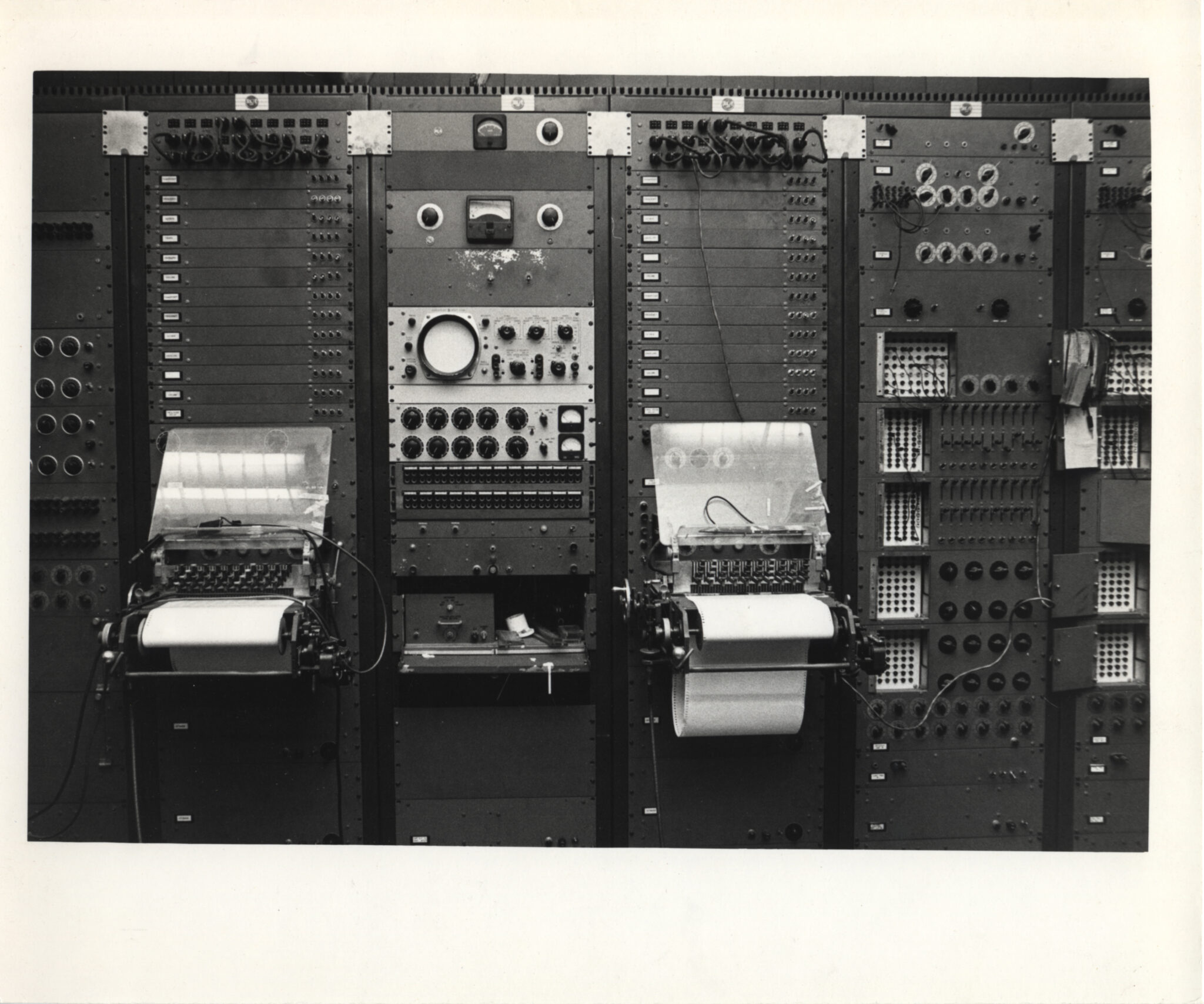
If DIY means being completely independent, then State Music consists of being completely dependent on external funding and hierarchically subordinate to an organisation such as a national radio station, a university or even a multinational corporation (Philips or RCA, for example) whose sphere of influence is comparable to that of certain states. Electronic music had already existed since the beginning of the twentieth century – or perhaps even before, depending on what you include in that category. By the late 1920s, instruments such as the Theremin, Trautonium and Ondes Martenot had been introduced – some even commercially – and electronic sound experiments were happening in the fields of cinema and avant-garde music. The first steps of musique concrète were taken in the 1940s at the Club d’Essai with Pierre Schaeffer, alongside Halim El-Dabh’s work in Egypt, creating pieces for magnetic wire recorders. But it was only in the early 1950s that the idea of ambitious electronic sound studio became widespread – studios equipped with high-quality recording devices, capable of developing new techniques for sound synthesis and processing, making it possible to do research in proper conditions and get paid for inventing the future of music. Throughout the coming chapters, when I talk about the State, I mean it in a very broad sense, as a power apparatus connected to numerous actors. Working with the terms “state” and “music” raises questions. I see the relationship between these two words as a spectrum along which we oscillate between imperialism and nationalism, infrastructure and superstructure, public and private, arti sanal work and scientific research, academicism and autodidacticism, working class and bourgeois, power and counter-power, unionism and individualism, and hegemony and the avant-garde.
In The Enabling Instrument: Milton Babbitt and the RCA Synthesizer, published in the Contemporary Music Review, American researcher Martin Brody talks about the “military-industrial-academic-cultural complex” to describe the environment within which the synthesisers of the early 1950s emerged. During my research periods in Stockholm, Belgrade, Athens, Den Bosch and New York, I mainly spoke with people working on the national particularities of their studios. And anyway, issues of soft power and political influence run throughout the history of the arts and cultural institutions. Benjamin Bürbaumer, economist and researcher specialising in imperialism, uses the term “structural interdependence” to describe the relations between state and capital. He explains that a “state tends to conduct policies that favour capital accumulation” because it needs a “good” economic climate and growth to ensure its own reproduction, through taxation or debt. Cultural policies reflect these logics. They too need a favourable economic and political climate to reproduce themselves.
One problem remains: Which states are we talking about? Here, I’m mainly referring to the ones I visited (Sweden, the Netherlands, Greece, Serbia, USA) and the French and German studios (Paris and Cologne in particular). Of course, it would be better to broaden the focus, but I started with what was accessible to me. What bothers me is that by focusing on these studios whose history has already been told many times, we inevitably reinforce the narrative of electronic music as primarily Western. But even for the West, things need a bit of nuance; not all contexts are equal. To make electronic music under Franco in Spain, you had to hide. In Warsaw, the opening of the Studio Eksperymentalne Polskiego Radia faced numerous problems, as the music didn’t fit at all within the strict framework of socialist realism – the official art form of the Soviet Union since 1934. In fact, each country deserves closer attention. The project Unearthing The Music – Sound and Creative Experimentation in Non-democratic Europe is a good resource for exploring these issues. Labels like Sub Rosa and Creel Pone bootlegs are valuable for dis covering electronic music from all over the world. Historical circumstances are multiple, tangled, nonlinear. Dominant narratives need to be countered, whether they are national, institutional or individual. These trajectories intersect everywhere; sometimes they reinforce each other, sometimes they cancel each other out, leading to a concept that Portuguese sociologist Boaventura de Soussa Santos calls “epistemicide”: “the hierarchization of knowledge by the West, the marginalization and destruction, by Western imperialism, of non-Western knowledge systems” (Epistemologies of the South: Justice Against Epistemicide). Anyway, I just wanted to establish the limits of this text. It’s up to you, readers, to do what you can with it.
That said, I’d like to continue this project, extend it and better understand what took place outside of my modest field of expertise. In particular, I’d like to know more about CLAEM, Centro Latinoamericano de Altos Estudios Musicales – an important electronic music studio founded in Buenos Aires in 1962 and notably funded by the Rockefeller Foundation and the Di Tella family, from the Argentine industrial elite. Its history has long been silenced by Western academia, and we still hear little about it. So, I recommend checking out The CLAEM and the Construction of Elite Art Worlds: Philanthropy, Latinamericanism and Avant-garde Music, the impressive thesis by 7 Luis Eduardo Herrera published in 2013. I also recommend reading A Sonic Indofuturism, an article by Budhaditya Chattopadhyay freely accessible on the Organised Sound journal website and published by Cambridge University Press. It discusses the influence of Indian traditional music on a number of composers such as John Cage, Pauline Oliveros, Éliane Radigue, Terry Riley, Marion Zazeela and La Monte Young, among others. Finally, I’d like to point out Jean-Hugues Kabuiku’s article: World Music for Who: Personal Histories of Non-Western Electronic Synthesis, which was shared with me by my comrade and musician Clara Levy. The writing sheds light on the Iranian and Indonesian contexts.