00:00
Kunst am Bau: Community Echo
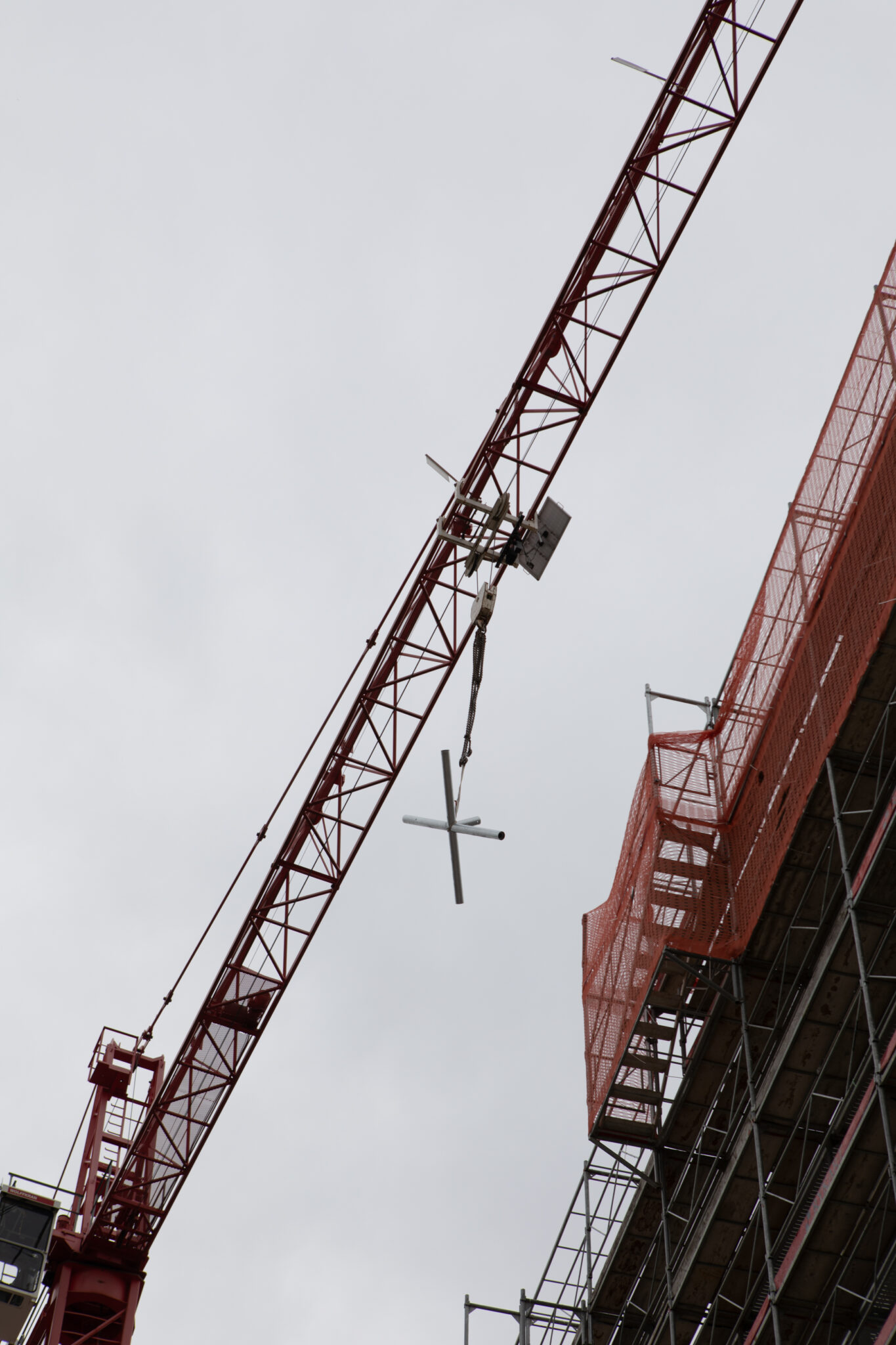
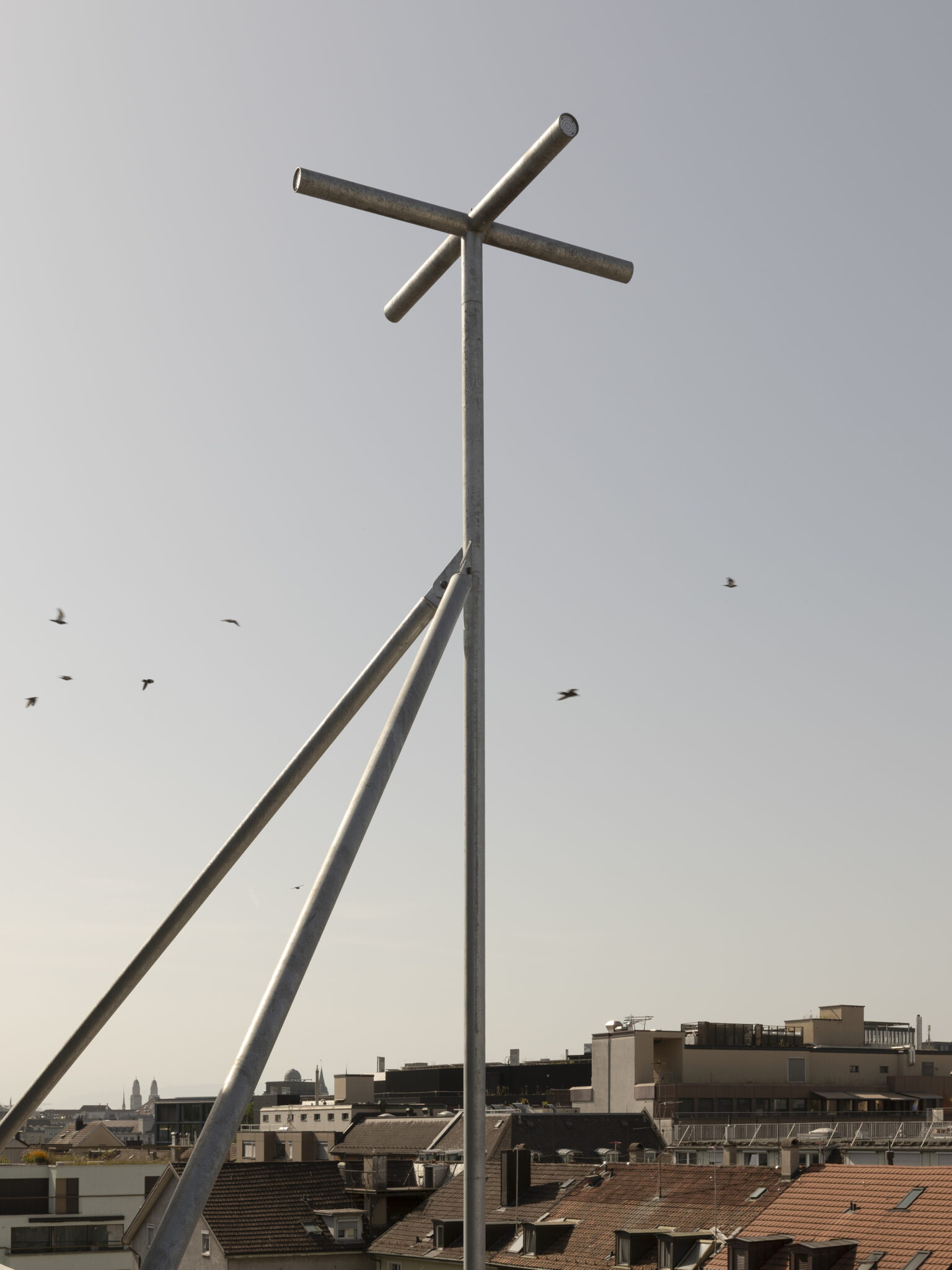
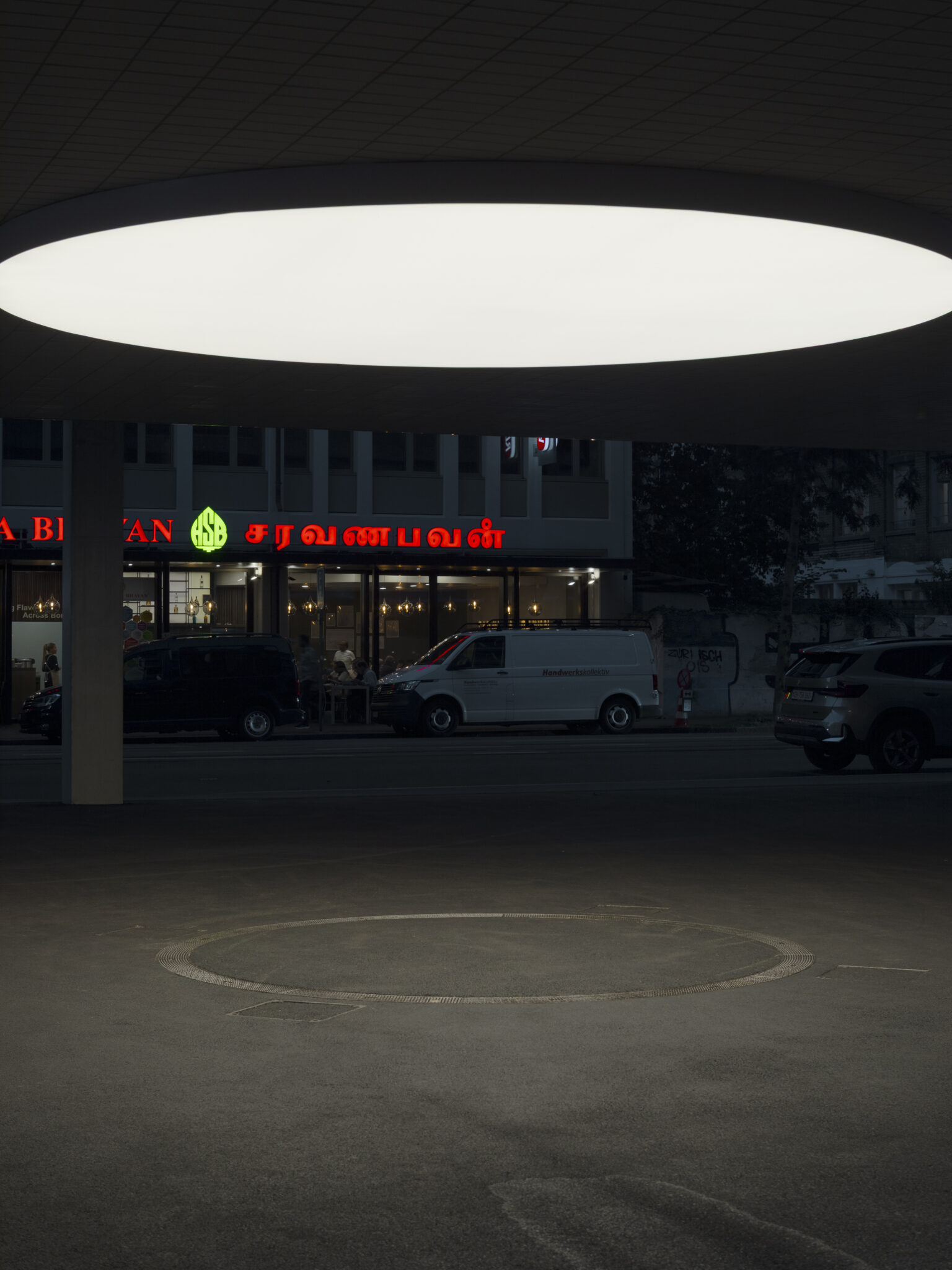
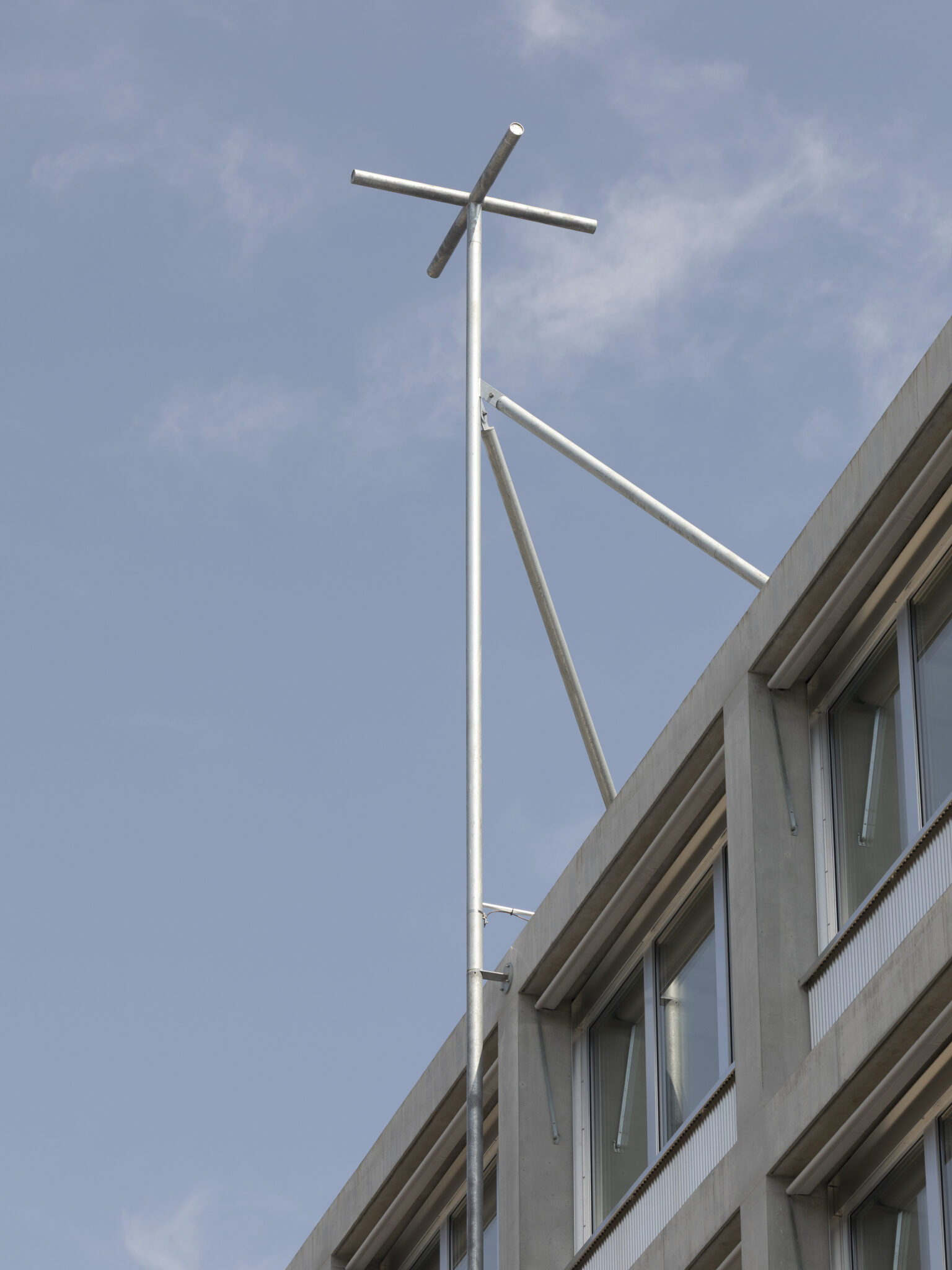
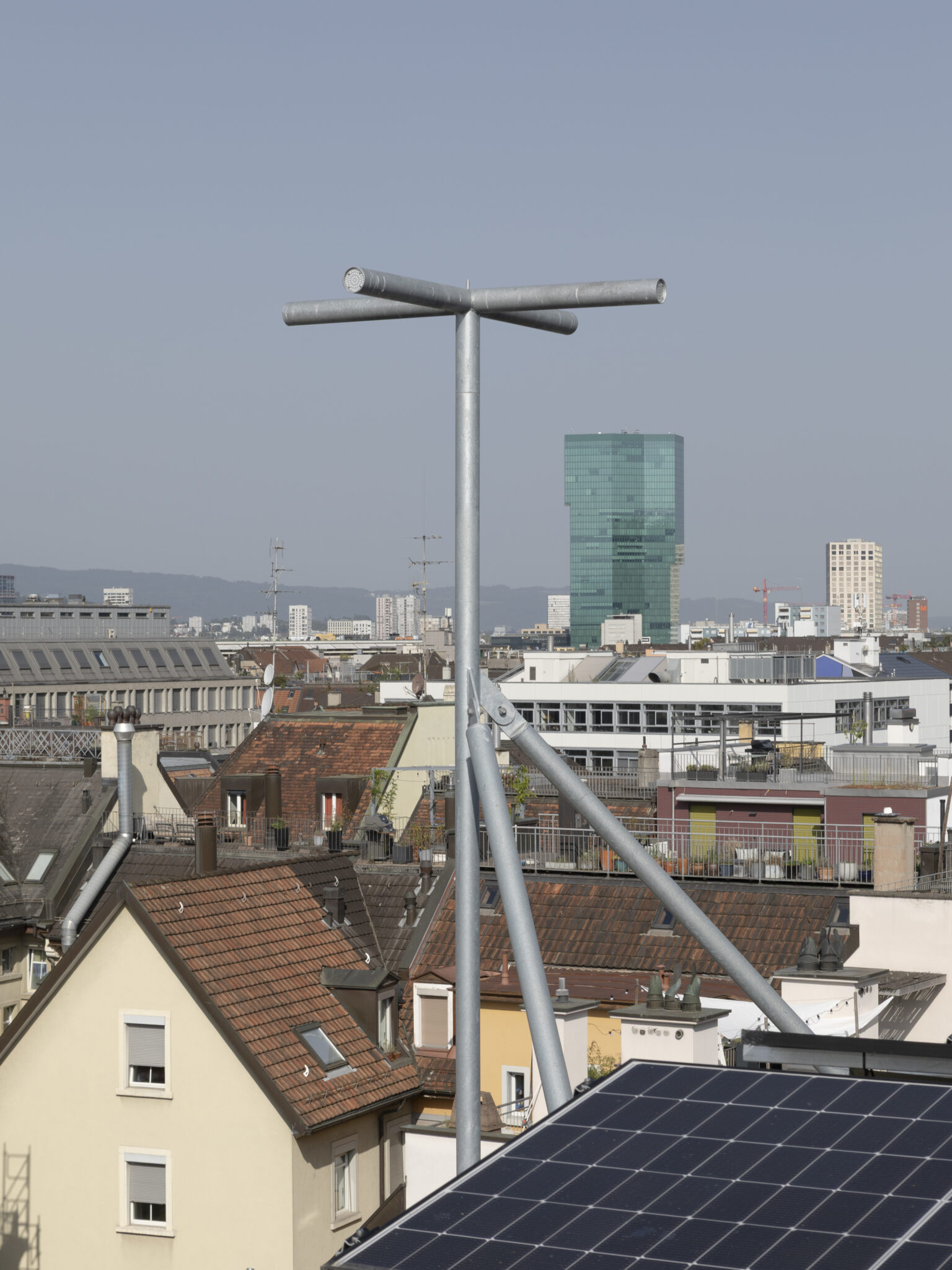
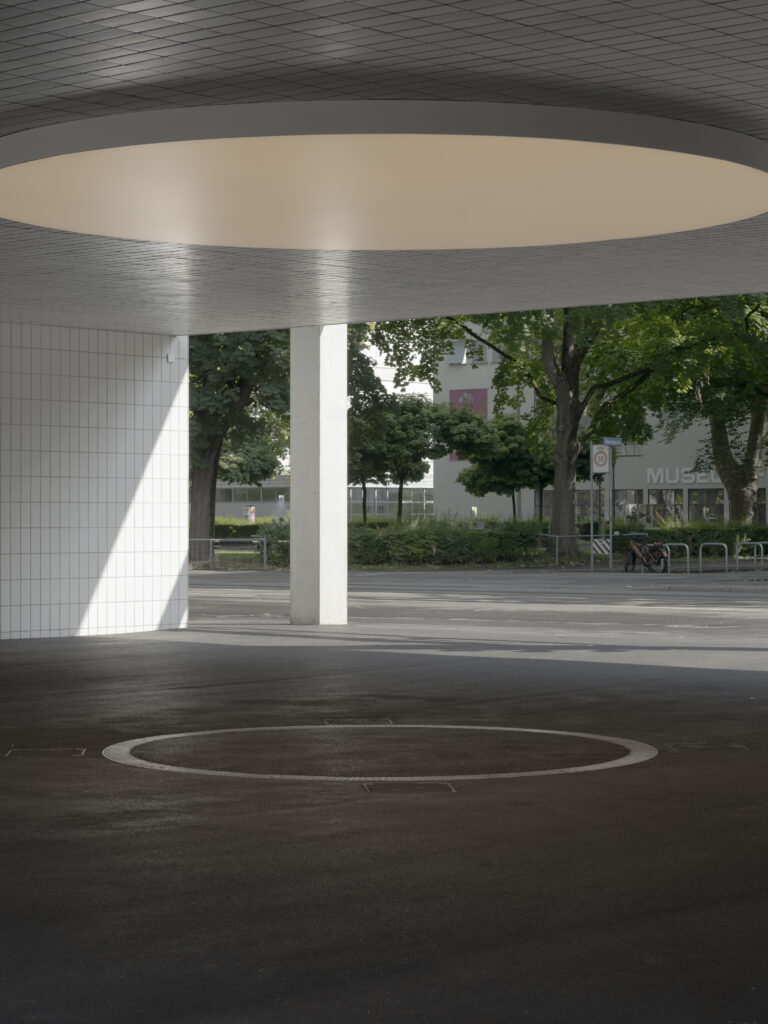
At the summit of a 27 meter antenna, four microphones capture the city’s soundscape in continuous 360° recording. The audio is replayed twelve hours later, emerging from a sound-equipped drain embedded in the ground at the building’s entrance.
The setup follows a technical logic similar to the devices we equip our buildings with: lightning rods, satellite dishes, antennas, sensors… Its installation raises a number of questions: What sounds do our cities produce? Who has the right to make noise? Who enforces silence? Who tries to be heard? What sounds do we no longer pay any attention to? What do we never hear? Are we being listened to?
The system records and broadcasts sound into public space, in a constant stream, 24 hours a day, 7 days a week. If the equipment is maintained and the school is not bombed, time will allow us to listen to the evolution of Zurich’s sound environment. This piece will give those who choose to listen the chance to become auditory witnesses to the effects of technical, political, climatic, urbanistic, and social changes in the country’s largest city.
We thought that the inherent properties of sound would be an effective way of subverting the notion of perimeter proposed for this project. Unlike light waves, sound waves not only reflect off surfaces, they can also bypass or even pass through certain obstacles they encounter. Sound propagates and requires a great deal of knowledge in order to be controlled. If we place microphones near the inner boundaries of a perimeter, we will be able to pick up sound coming from outside that limit. And if we place these microphones high up, the sound waves are less blocked by other buildings and our perimeter can extend even further into the city.
This gesture allows us, with the help of technology, to extend our auditory perception far beyond the limits of the imposed perimeter and thus to bring sound information from the city into the schoolyard. This movement from outside the perimeter to our listening space is our first gesture. It is a sign of openness to remind everyone, especially the students and teachers, not to forget about the outside world.
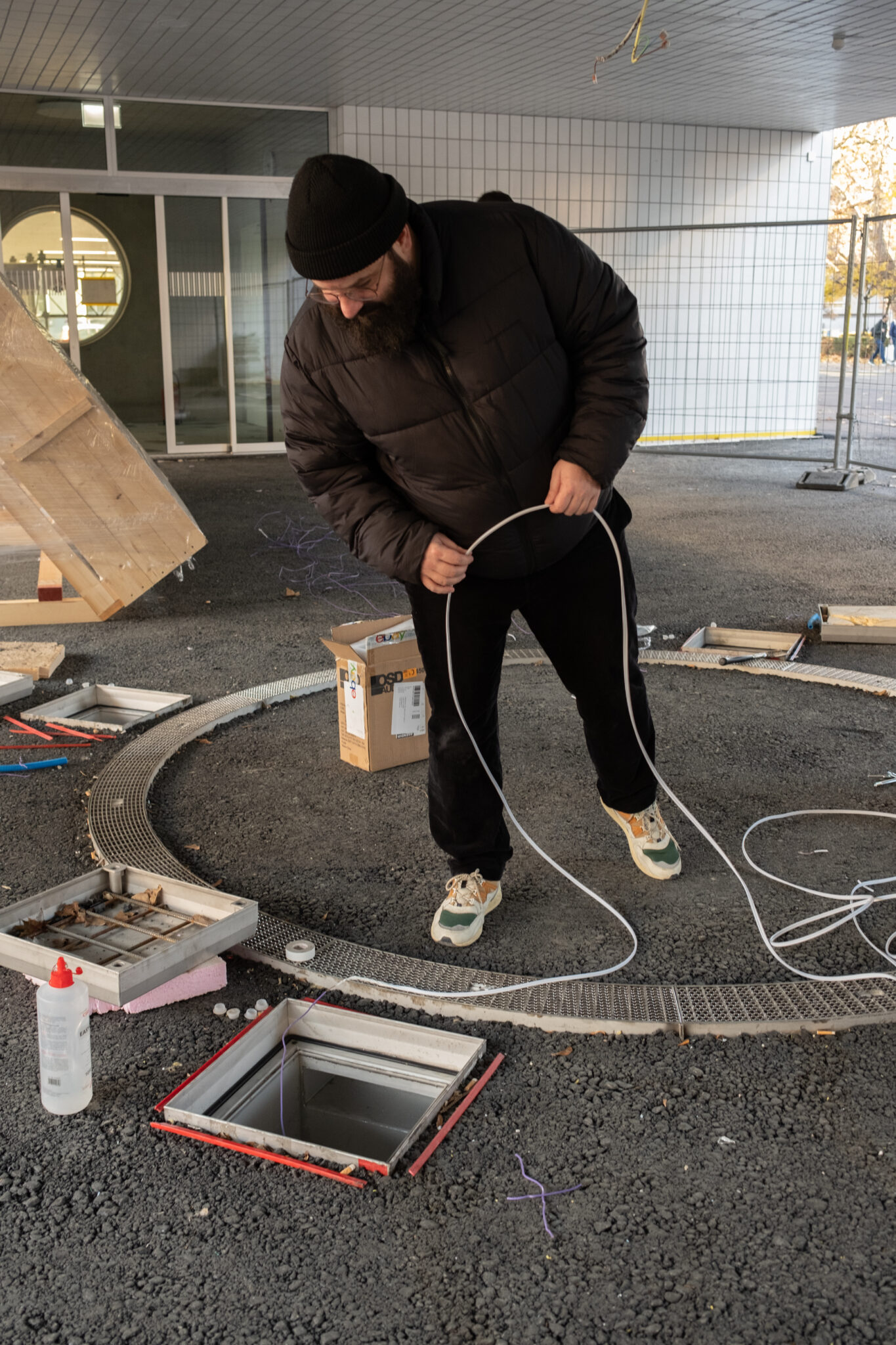
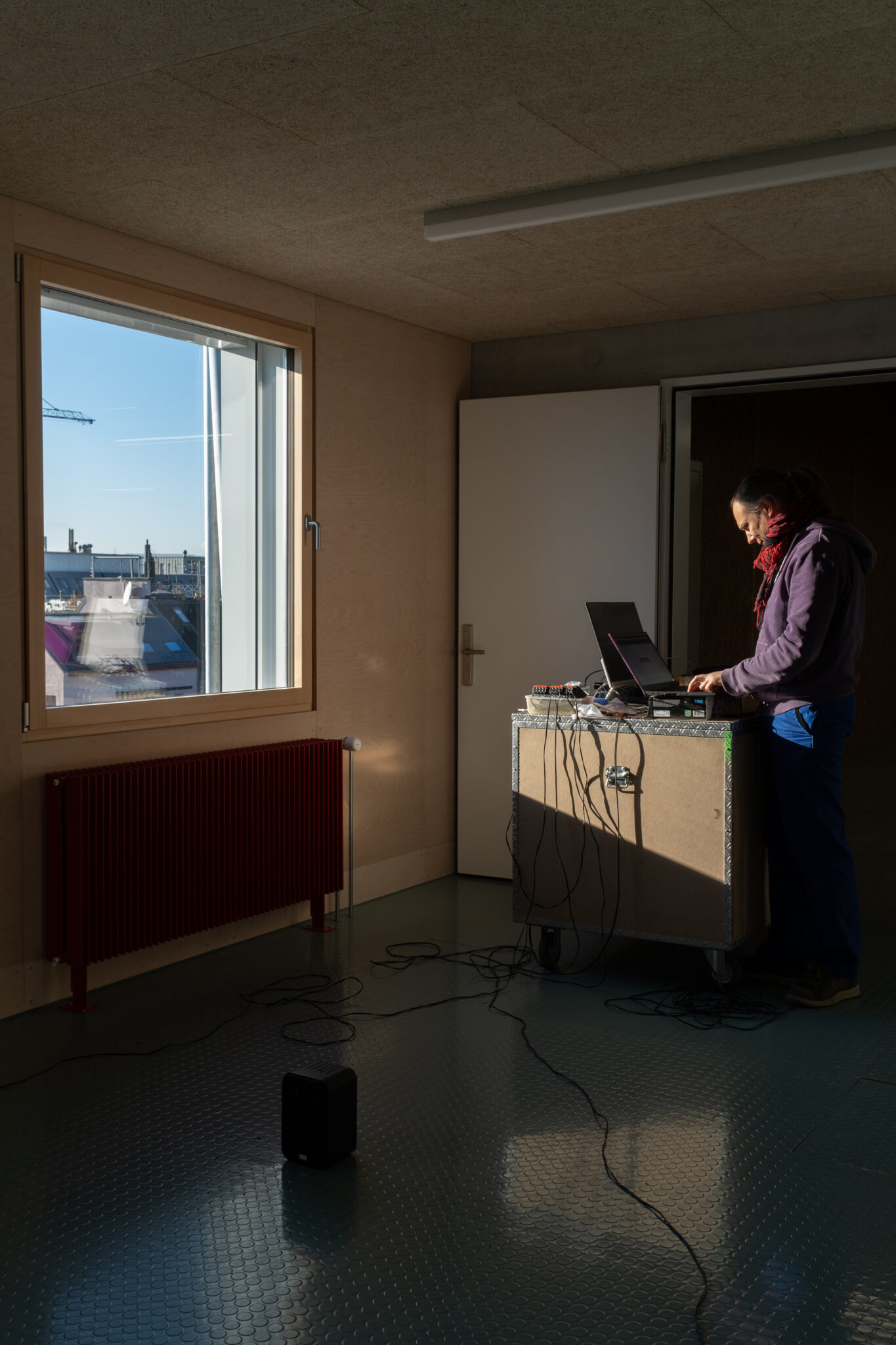
Soundwalking, field recording and various amplification techniques are all part of my artistic and musical toolbox. But I do not just record sound. I create sound with microphones. That process is called phonography. It’s an active examination of a territory. This time, however, I will let the sounds travel on their own to four stationary microphones. Because I can’t be in this place all the time.
But simply placing microphones and listening to the sound of the city suggests the possibility of documenting reality. This idea is a deceptive illusion. Artistic, conceptual and technological choices always create a new subjectivity. And I’m not a naturalist because it doesn’t makes sense to me as nature does not exist outside of us. I want to avoid having an external position. Aslo, this installation is not about me and I’m not here to bring any sound or music. This work is about listening to a place, alone or collectively, in a different way.
So if we refuse to generate new sounds and if we don’t want to just listen to what exists, I can only deal with two parameters. Time and space. Sound only vibrate through time and space. That’s why we delay the sound for twelve hours, place the microphones above the roof, bury the speakers in the courtyard and enhance the sense of movement. This simple protocol produces a completely different, unique and forever evolving listening experience. Two different temporalities and two spatial positions mixed to create a new sonic spacetime. The present audible environment of the listening spot is now mixed with the sounds of the heights of the area recorded twelve hours ago. The time shift allows a collision of worlds that do not necessarily intersect in the neighbourhood. Nights are mixed days and mornings with evenings. This delay acts as a social memory of the area. A “community echo”.
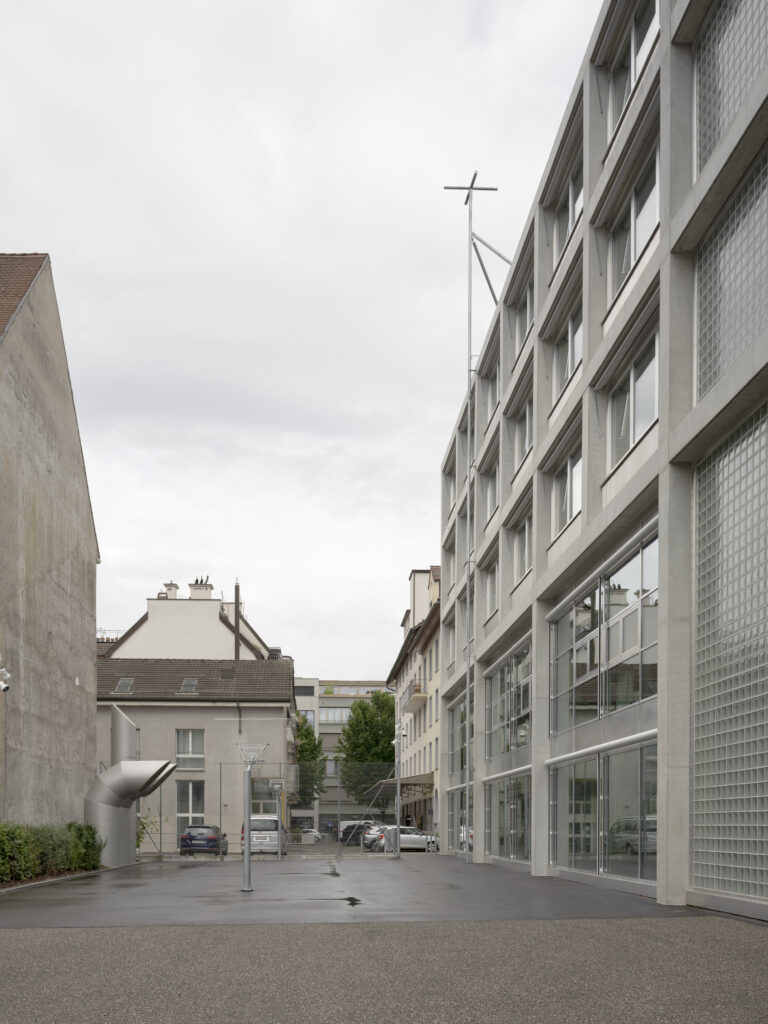
Although the perspectives offered by sound art are exciting, permanent sound installations in public spaces are rather rare. Simply because one of the main challenges is not to disturb anyone. No one wants to be bothered by a sound all the time. For this work, we looked closely at the installations made by the pionneering sound artist Max Neuhaus. He is one of the few artists who has managed to place his installations in public space over a very long period of time, so it would be silly not to mention him. We have had the opportunity to look at a number of his installations in an urban context, and there are four main principles that he pays attention to:
- Optimum speaker placement to control sound dispersion.
- The use of frequencies that are neither too high nor too low.
- The volume is controlled in such a way that the sound is audible within perimeter and almost absent outside the perimeter.
- Reliable technical material.
Dynamic audio compression plays an important role. The idea is to keep the output volume stable in decibels, whatever is happening in the sound environment. The volume is turned up a little when things are very quiet, but automatically turned down when the sound entering the microphones exceeds a certain threshold. In this way, the legal limits are never exceeded and we can automatically keep everything under control. Another technical point is that we will be able to monitor the system remotely.
Recording sound outside is not a neutral gesture. A subtext of this installation is to question the tools of surveillance system and what Gilles Deleuze calls the society of control. “Community Echo” is the opposite principle of a security or monitoring system. Anyone can listen to what has been recorded, and everything is automatically erased. It is transparent. By positioning the mics high above the ground, we can capture the sound of the city without compromising people’s privacy. We want to listen to a systemic sonic environment. We don’t care about individual voices. We will mainly hear distant resonances from traffic, wind, distant trains, etc. On a quiet night, sounds from further away could be heard.
A school is where knowledge is passed from teacher to student. Students learn the technologies of today and tomorrow, how to build the world to come, and how to use its precious resources. But school can be a challenging and stressful place for students. “Community Echo offers them a place to think and concentrate, or dream and relax. Listening to the sounds of the environment can be very calming for some people. This installation is dedicated to the students. We wish them that the sounds coming from the loudspeakers will evolve in the years and decades to come.
What we call noise pollution, and more generally the whole sound environment, can tell us a lot about the consequences of political decisions. We need to pay attention. I hope that a change in perception, the use of a different sense, can challenge the public in a meaningful way. Perhaps one day we will hear fewer cars and planes. Or will the city be quiet again because of another pandemic? The world is changing rapidly. Resources are scarce, technology is moving faster and faster. Capitalism is in crisis. The economy is very unstable, conservative political views are on the rise and climate change is frightening. How these things will affect the sound environment is not the question. What we want to know is how sound and listening can help us to understand new things, help us to move forward and think.